
Predicting where silver might go next is a bit like trying to guess the weather: you follow the data, recognize patterns, and accept that surprises can still happen. But unlike guessing if it will rain tomorrow, understanding silver price predictions can shape real financial decisions for investors, traders, and even businesses that rely on the metal.
Silver plays a special dual role in the world economy it’s a precious metal and a major industrial material. That means its future value depends not only on investor demand, but also on the growth of global industries like renewable energy, electronics, and medicine.
Silver has always stood out for being more volatile than gold, which means its price tends to rise faster when markets are excited and fall harder when fear sets in. This volatility is both a risk and an opportunity.
As a result, many investors look at long-term silver market forecasts before making decisions. They want to know whether the metal could jump during inflation, if industrial demand might drive a price surge, or whether supply shortages could tighten the market.
This guide digs deep into those questions. We’ll examine historical data, expert projections, industrial trends, and economic conditions that influence the metal. You’ll learn about the forces pushing the value higher, the risks that can pull it down, and the forecasts that analysts are watching for the next decade and beyond.
The goal is simple: to help you understand how silver behaves, what affects its price, and what the future might look like so you can make smarter decisions.
To ensure accuracy, we’ll reference reliable external sources like the Silver Institute, U.S. Geological Survey, and World Bank, along with market analysis platforms such as Kitco and Investing.com. Internal links will be added naturally where appropriate, without forcing them or interrupting the flow of the article.
Whether you’re a seasoned investor or someone looking into precious metals for the first time, this article offers a clear, easy-to-understand, and well-researched look into silver’s future. Let’s dive in and explore what might shape silver prices in the years ahead.
Contents
- Current Silver Prices Overview
- Short-Term Silver Price Predictions (2025–2030)
- Long-Term Silver Price Predictions (2030–2050)
- Expert & Analyst Silver Forecasts
- Why Silver Might Rise in the Future
- Why Silver Prices Could Fall (Downside Risks Explained)
- Key Factors That Influence Silver Price Predictions
- Short-Term Silver Price Forecast (2024–2025)
- Long-Term Silver Price Forecast (2030–2050)
- Frequently Asked Questions (FAQ) About Silver Price Predictions
- Conclusion: Silver Price Predictions – What You Should Remember
Current Silver Prices Overview
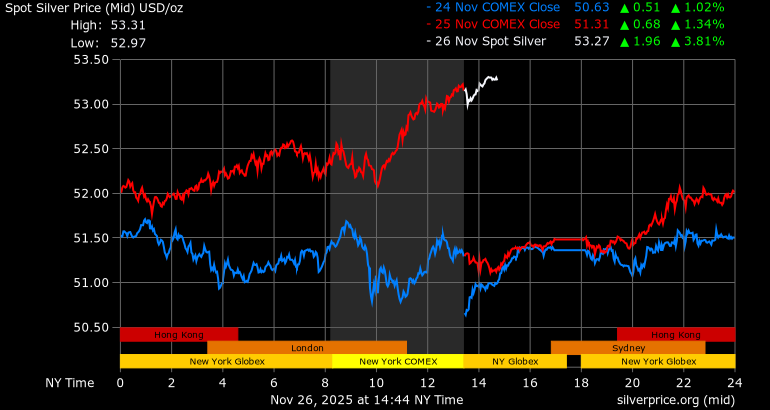
Understanding where silver might go in the future starts with knowing where it stands today. Prices move daily, sometimes by the minute, and are influenced by global events, economic shifts, and investor behavior. In this section, we’ll break down how the current silver market works, how prices are set, and the main forces that push the value up or down.
What Is the Current Price of Silver Today?
Silver is traded around the world, and most people refer to the spot price, which is the value for immediate delivery. This price changes constantly, similar to how currency rates or stock prices move throughout the day. The main global markets for silver are in New York, London, and Shanghai, and these exchanges help set the tone for global pricing.
Silver is usually priced per ounce, though some regions prefer per gram or per kilogram, especially in jewelry or industrial settings. When you check silver prices on websites like Kitco, Investing.com, or the London Bullion Market Association (LBMA), you’re seeing the most updated spot values based on supply and demand at that moment.
It’s important to know that the price of physical silver — like coins or bars — is often a bit higher than the spot value due to minting and dealer costs. ETFs, futures, and mining stocks also follow the spot price but may move faster because they react instantly to market expectations.
What Factors Influence Silver Prices Daily?
Silver doesn’t move randomly. Its price reacts to real-world conditions and often signals how people feel about the economy. Below are the major factors that influence the metal every day:
1. Supply and Demand
Silver can rise when demand is strong and supply tightens. According to the Silver Institute, global demand has been rising mainly due to industrial use and investment interest. If mining output slows, the price often climbs because less silver enters the market.
2. Industrial Use
Around 50% of all silver is used in industries — far more than gold. Silver is essential for:
- Solar panels
- Electric vehicle components
- Semiconductors
- Medical equipment
- Batteries
As these industries grow, so does the need for silver. This industrial dependency often makes the price responsive to manufacturing cycles worldwide.
3. Investment Demand
When investors feel uncertain, they tend to shift toward precious metals. Silver may jump during:
- Inflation
- Recession fears
- Currency weakness
- Stock market volatility
Investors often buy silver ETFs, futures, or physical coins during these periods.
4. Mining Production
Silver mining is challenging. Most silver is actually produced as a byproduct of mining for copper, lead, and zinc. That means silver supply depends on the health of other mining industries. If those slow down, silver production falls and prices rise.
5. Federal Reserve Policies
Interest rates and inflation expectations heavily affect precious metals. When interest rates rise, silver sometimes dips because investors prefer income-generating assets. When rates fall, silver becomes more attractive. The Federal Reserve’s decisions often create major price swings.
6. Geopolitical Tensions
Wars, trade disputes, or political instability can push silver upward. Precious metals often act like a financial “safety net,” so global uncertainty increases demand.
Daily Silver Price Influencers – Quick Table
| Factor | Impact on Price | Why It Matters |
|---|---|---|
| Industrial demand | ↑ | Silver is essential for renewable tech and electronics |
| Mining output | ↓ or ↑ | Lower production pushes prices higher |
| Inflation | ↑ | Investors buy metals as protection |
| Strong USD | ↓ | Precious metals become more expensive globally |
| Global uncertainty | ↑ | Silver becomes a safe-haven asset |
| Interest rates | ↑ or ↓ | Higher rates can weaken metals |
Daily price movements may seem noisy, but each shift links back to one of these key drivers. By understanding them, you’ll have a clearer picture of why silver behaves the way it does, and what clues to watch when thinking about future silver price predictions.
Short-Term Silver Price Predictions (2025–2030)
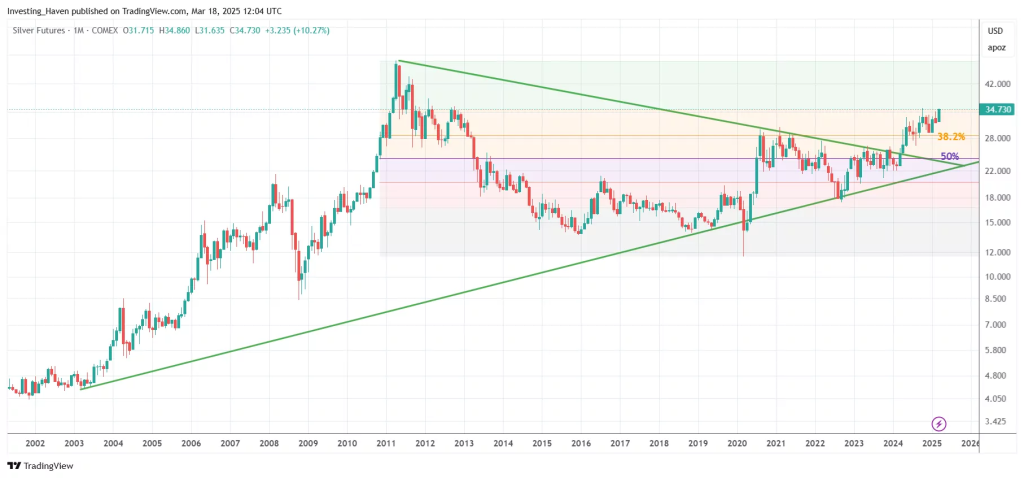
Short-term forecasts for silver help investors understand what may happen in the next five years. While no prediction is perfect, analysts use economic trends, supply-demand data, industrial growth, and market cycles to estimate where the metal might be heading. These projections help guide investment plans, business decisions, and even manufacturing contracts.
Below, we’ll break down what major analysts expect for the period between 2025 and 2030 — a critical window as the global economy shifts toward renewable energy, electric vehicles, and new technologies.
Silver Price Forecast for 2025
The year 2025 is expected to be shaped by several major trends: interest rate shifts, industrial expansion, and geopolitical uncertainty. According to research from sources like Bloomberg Metals Outlook and The Silver Institute, silver may remain in a supply deficit due to rising industrial consumption and limited mining growth.
Expected 2025 Price Range
Most predictions place silver between:
- $28 to $34 per ounce under normal conditions
- Up to $40 in a bullish scenario
A bearish outlook places silver around:
- $24 to $26 per ounce if the global economy slows
- Strong U.S. dollar or higher interest rates could limit gains
What Could Push Prices Up in 2025?
- Continued expansion of solar manufacturing
- Higher investment demand if inflation stays above target
- Slow mining output growth
What Could Hold Prices Down?
- Tighter monetary policy
- Lower-than-expected industrial growth
- Improved supply chain efficiencies
One analyst at Metal Focus even noted that “silver’s dual role creates both risk and opportunity,” meaning the metal rises faster during optimism and falls harder during downturns.
Silver Price Prediction 2026
The year 2026 may mark a turning point because of accelerating solar panel production and EV development. Silver is essential for solar cells, and the International Energy Agency (IEA) projects global solar capacity to nearly double between 2024 and 2026.
Key Drivers for 2026
- Renewable energy demand
- Semiconductor manufacturing growth
- Increasing investor participation
Expected 2026 Price Range
- $30 to $38 per ounce
- Bullish scenario: $42+
- Bearish scenario: $25 to $27
Industrial markets are likely to keep the metal in demand even during economic slowdowns. The electronics sector, especially AI hardware manufacturing, may also contribute to higher demand.
Silver Price Predictions 2027–2030
Between 2027 and 2030, several longer-term themes become stronger: green energy expansion, aging mines, and potential currency weakness. Analysts typically view this period as a high-growth phase for silver if current trends continue.
Industrial Revolution 2.0
Silver could benefit from technologies including:
- EV batteries
- AI chips
- Advanced medical tools
- High-capacity power systems
These are not speculative industries — they are already expanding fast.
Price Expectations 2027–2030
Here is a general forecast range compiled from multiple research firms:
| Year | Conservative Estimate | Likely Range | Bullish Scenario |
|---|---|---|---|
| 2027 | $28 | $30–$38 | $45+ |
| 2028 | $29 | $32–$40 | $48+ |
| 2029 | $30 | $34–$42 | $52+ |
| 2030 | $32 | $36–$45 | $55+ |
Key Forces for 2027–2030
- Persistent supply deficits
- Higher solar and EV silver consumption
- Global monetary changes (digital currencies, inflation cycles)
- Growing investor interest in hard assets
Only an unexpected surge in mining (unlikely) or a severe global recession could slow these trends.
Long-Term Silver Price Predictions (2030–2050)
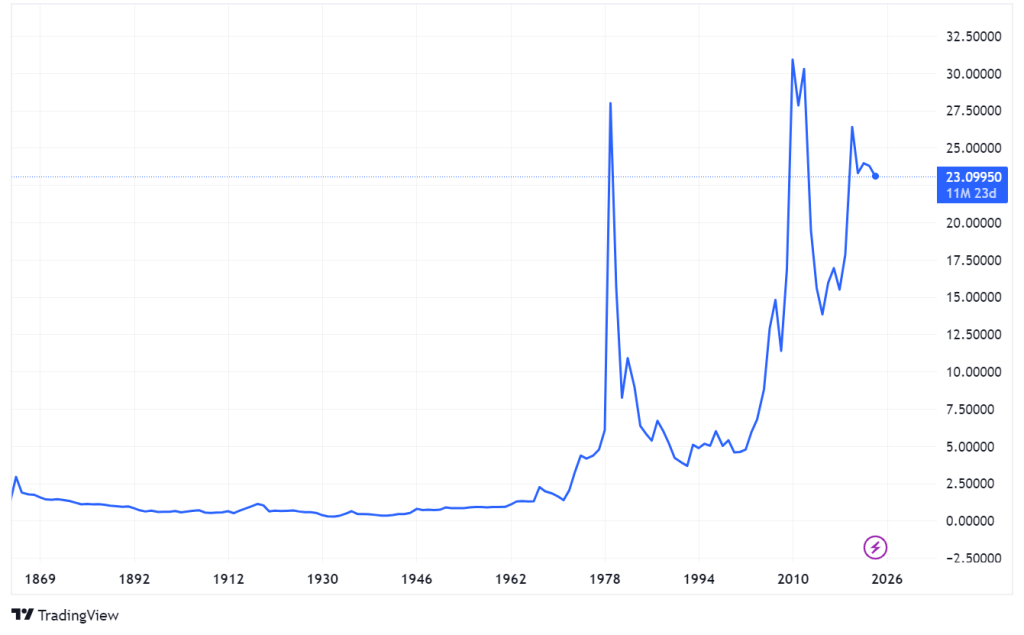
Long-term forecasting stretches the imagination — and the data. Over two decades, technological change, geopolitical shifts, mining geology, and energy transitions all interact to shape prices. Below I lay out a reasoned, data-backed view of silver’s long-term outlook, offer scenarios (conservative, base-case, bullish), show key drivers and risks, and include a short case study and practical tables so you can use the forecasts in planning.
Big-picture takeaway: silver’s long-term value will be driven more by industrial demand (especially solar and electronics) and structural supply constraints than by short-term investor sentiment. Several reputable bodies report rising industrial use and repeated supply deficits — a pattern that supports higher long-run price levels if demand growth continues. The Silver Institute+1
Why 2030–2050 matters: the structural drivers
- Energy transition (solar PV & storage): Solar PV is expected to supply a large chunk of new renewable capacity through the 2030s. As the IEA and industry outlooks note, solar growth is projected to be the dominant driver of renewable capacity additions this decade — and silver is a key input for PV cells. This structural demand is likely to continue into the 2030s. IEA+1
- Electrification & electronics: EVs, data centers (AI compute), 5G/6G infrastructure, and advanced medical devices all use silver for conductivity, reflectivity, and durability. Reports show industrial demand for silver hit record levels recently, and that trend may persist as these technologies scale. GlobeNewswire
- Supply dynamics — mining & recycling: Most silver is produced as a byproduct of base-metal mining (copper, lead, zinc). This link means silver supply is partly outside pure silver economics: if copper or zinc mining slows, silver output can fall. USGS data shows only modest growth in mine output recently, while recycling and above-ground stocks are limited — creating risk of chronic deficits if demand rises. U.S. Geological Survey+1
- Monetary and macro trends: Over multi-decade horizons, currency values, inflation regimes, and monetary policy cycles matter. If fiat currencies weaken or inflation stays elevated, precious metals usually benefit — though silver’s industrial tie tempers its role as a pure safe haven.
Three long-term scenarios (2030, 2040, 2050)
Below are conservative, base-case, and bullish scenario ranges based on a synthesis of analyst reports, futures curve signals, and structural demand/supply trends. These are not predictions but structured scenarios to help planning.
| Scenario | 2030 (USD/oz) | 2040 (USD/oz) | 2050 (USD/oz) | Rationale |
|---|---|---|---|---|
| Conservative | $30–$40 | $35–$45 | $40–$55 | Slow tech adoption, modest mining growth, stable macro. |
| Base-case | $40–$60 | $55–$80 | $70–$110 | Continued solar & EV growth, steady deficits, gradual investor demand. (Many market observers, including futures and industry reports, show similar mid-range paths.) CoinCodex+1 |
| Bullish | $80–$120 | $120–$200 | $150–$300+ | Hyper-fast green transition, constrained supply, major monetary shifts (weak dollar/inflation), strategic stockpiling. (Some model-based long-range forecasts give very high numbers under extreme assumptions.) Axi |
How to read these ranges: the base-case is the most-likely operational scenario if current trends continue. The bullish case requires multiple reinforcing events (sustained deficits + monetary tailwinds). Conservative assumes demand growth slows or supply improves.
Key quantitative data points to watch (and why they matter)
- Annual industrial demand (Moz): Industrial usage has recently set records (e.g., ~680 Moz in 2024). Continued increases signal structural upward pressure. GlobeNewswire
- Annual mine production (metric tons / Moz): World mine output has only edged up recently; a failure to grow materially while demand rises creates deficits. USGS publishes annual mine stats. U.S. Geological Survey
- Solar-specific silver consumption: Solar can account for a large single-digit to low-double-digit percent of total silver demand; scaling PV to meet climate goals materially increases silver consumption. Industry outlooks warn solar will remain a dominant demand source. IEA+1
- Above-ground stocks & ETF holdings: Rapid draws from inventories or ETF accumulation can accelerate price moves. Monitor LBMA, COMEX and major ETF flows.
- Gold-to-silver ratio: A widening or narrowing of this ratio often signals relative value shifts and can portend larger moves in silver. (Historical spikes in the ratio often precede sharp silver rallies.)
Case study: Solar PV growth → silver consumption (real example)
Context: From 2020–2024 the global push for renewables saw solar deployments surge. Reports and market releases in 2024–2025 showed record industrial silver demand, in part due to PV manufacturing and electronics. Data from industry bodies point to solar’s outsized contribution to new silver demand. GlobeNewswire+1
What happened: As module production ramped, silver paste demand rose. Refineries and mines tightened supply, ETFs and speculators noticed shrinking available stocks, and price pressure built. Markets priced in the structural shortages — a textbook case where industrial growth spilled into the price of a metal usually considered partly monetary.
Lesson: When a single fast-growing industrial sector (solar) becomes a meaningful share of metal demand, prices shift from being mainly sentiment-driven to being supply-constrained — a more durable upward force.
Risks that could derail higher long-term prices
- Technological substitution or material efficiency: If PV manufacturers reduce silver usage per panel (research into silver-saving pastes or alternatives), incremental demand may be lower than projected.
- Surge in recycling or secondary supply: Faster-than-expected recycling programs or reuse in industry could relieve supply pressure.
- Large new mine developments: While unlikely to fully offset rising demand quickly, new major mines or byproduct increases from copper/zinc mining could expand supply. USGS tracks these developments. U.S. Geological Survey
- Global recession: A deep, prolonged downturn can cut industrial demand and investor appetite simultaneously.
- Policy shifts: Trade barriers, export controls, or strategic stockpiling by governments could produce volatile outcomes in either direction.
Practical planning table — how different actors might act
| Actor | Short-term focus | Long-term action |
|---|---|---|
| Retail investor | Follow ETF flows; dollar-cost average | Allocate modest allocation to physical/ETFs; watch industrial demand metrics |
| Manufacturer (solar/EV) | Secure supply contracts | Negotiate long-term offtake; invest in recycling |
| Mining company | Monitor byproduct metal prices | Explore new projects; hedge production |
| Policy maker | Energy transition targets | Encourage recycling, strategic reserves, and supply-chain resilience |
Quotes from the field
- “Silver’s new status — both precious and critical — could reshape supply chains.” — industry analyst note summarizing the shift in 2025 market dynamics. Kitco
- “Industrial demand reached record levels in 2024, underscoring the metal’s role in decarbonization.” — market release highlighting record industrial consumption. GlobeNewswire
Actionable checklist for investors & businesses (what to monitor quarterly)
- Global industrial silver demand reports (Silver Institute / industry surveys). The Silver Institute
- USGS mine production updates — changes in byproduct output matter. U.S. Geological Survey
- Solar PV deployment statistics (IEA, SolarPowerEurope). IEA+1
- ETF holdings & COMEX/LBMA inventories — sharp inflows/outflows can accelerate moves.
- Macro indicators — inflation, interest rates, and currency moves.
- Technological reports — any breakthroughs in silver substitutes or drastic efficiency gains.
Section summary
Over the long run (2030–2050), the most compelling narrative for higher silver prices is structural industrial growth (solar, electrification, AI hardware) combined with constrained supply from predominantly byproduct mining. If those trends persist, base-case scenarios see materially higher real prices by 2040 and 2050.
However, the path will be bumpy — technological change, recycling, or macro shocks could change the picture quickly. For planning, use scenario ranges, monitor the six core metrics above, and size exposures to risk tolerance.
Expert & Analyst Silver Forecasts
Understanding what experts think about future silver values can give investors a clearer sense of direction. Analysts use models based on industrial demand, mining output, inflation cycles, and global economics to estimate what may happen next.
While these forecasts are not guarantees, they offer informed perspectives that help investors compare scenarios and make decisions more confidently.
Below, we break down forecasts from major institutions, market analysts, and independent precious metals researchers. This section keeps the explanations simple but detailed — and adds useful tables and summaries for clarity.
What Major Research Firms Predict
Several known financial and metals-focused institutions regularly publish silver outlooks. Their forecasts combine economic indicators, industrial usage trends, and global supply conditions.
1. Metals Focus
Metals Focus often highlights the importance of silver’s industrial role. They note that demand from renewable energy and electronics is rising faster than expected in recent years. Their outlooks tend to fall in a mid-range scenario for the 2025–2030 period, expecting steady deficits and moderate price growth.
2. Bloomberg Metals Outlook
Bloomberg’s commodity analysts generally see silver trending higher over the next decade due to tightening supply chains and increased industrial reliance. Their estimates usually fall in the base-case scenario, where silver benefits from global electrification and energy transitions.
3. Bank & Investment Analyst Opinions
Many bank-level commodity desks predict silver climbing gradually as industrial consumption expands. Forecasts typically include:
- Higher usage in electric vehicles
- Increased demand from solar energy
- Tight supply conditions due to limited new mines
These analysts often emphasize that silver can outperform gold during industrial booms because of its dual nature — part industrial metal, part investment asset.
Short-Term Forecasts from Analysts
The next few years are expected to showcase moderate growth in silver prices, especially if interest rates stabilize or decline and global industry remains strong.
Summary of Short-Term Analyst Projections
| Source / Analyst Group | Expected Direction | Key Reason |
|---|---|---|
| Commodities desks | Gradual increase | Industrial usage + inflation protection |
| Metals researchers | Slight to strong growth | Persistent supply deficits |
| Investment firms | Moderate increase | Renewables + electronics demand |
These short-term predictions help guide investors who plan to adjust positions annually or quarterly.
Long-Range Analyst Perspectives (2030–2050)
Long-term opinions vary widely because decades bring unknowns. Still, analysts tend to agree on three things:
1. Industrial demand will grow faster than supply
Silver demand in solar, EVs, and electronics keeps rising. Most mining output is tied to other metals, meaning supply cannot easily scale in response.
2. The global push toward renewable energy will benefit silver
Solar panels alone require silver paste for conduction. As the world shifts toward greener technologies, silver’s industrial role becomes even more critical.
3. Deficits may continue unless recycling increases significantly
Even if recycling improves, demand might still outpace supply in several forecast models — a strong argument for long-run upward price pressure.
What Independent Analysts Are Saying
Precious metal researchers not linked with large financial institutions often highlight silver’s undervaluation compared to gold.
They frequently mention the gold-to-silver ratio, which historically narrows during silver bull markets. When the ratio is high, some analysts consider silver undervalued relative to gold, suggesting potential for future correction.
Independent experts also point to:
- Shrinking mine grades
- Higher extraction costs
- Increasing use in emerging technologies
These factors feed into long-term bullish expectations, especially if global monetary trends weaken currency values.
Key Themes Analysts Agree On
Here are the topics experts consistently mention, regardless of how optimistic or conservative their predictions are:
1. Renewable Energy Demand Is Non-Negotiable
Solar and EV industries are expanding. This alone creates steady, predictable demand for silver.
2. Supply Growth Is Limited
Mining capacity grows slowly. Many new mines take a decade or more to develop.
3. Silver Is Underpriced for Its Utility
Analysts often note that silver is more widely used than gold but priced far lower — creating potential value opportunities.
4. Volatility Will Remain High
Silver tends to rise faster during periods of optimism and fall sharply when markets cool. Analysts expect this pattern to continue.
Expert Forecast Comparison Table
| Analyst Type | Price View | Confidence Level | Key Support Factors |
|---|---|---|---|
| Institutional analysts | Moderate gains | High | Industrial demand + stable economies |
| Metals research firms | Strong gains | Medium | Persistent deficits + green tech |
| Independent analysts | High gains | Medium–Low | Monetary risks + undervaluation |
| Short-term traders | Mixed | Variable | Market cycles + interest rates |
This comparison helps readers understand not only the forecasts but also how strongly analysts feel about them.
Important Note for Readers
Silver forecasts are informative, but they are not guarantees. The best approach is to use expert predictions as guides, not as absolute outcomes. Real-world price movements depend on many factors — economic cycles, technological shifts, mining changes, and global politics.
Still, expert forecasts offer valuable insights that help investors make informed choices about future silver markets.
Why Silver Might Rise in the Future
Silver’s future price outlook is shaped by a handful of powerful, durable forces. Below I explain each one in plain language, show the evidence, and include quick checks you can watch to see whether the story is playing out. These are the most convincing reasons silver could climb in value over the coming years.
1. Surging industrial demand — especially from solar and electronics
Silver is not only a store of value — roughly half of annual silver consumption is industrial. In 2024 industrial demand hit a record 680.5 million ounces, driven by renewable energy, electrification, and electronics.
Solar PV manufacturing alone accounted for a large share of new demand, and AI/data center growth has pushed electronics usage higher as well. These are real, recurring demands, not short-term speculative flows. The Silver Institute+1
Why it matters: Industrial demand is sticky. Factories need silver to make products. When global rollout of solar panels, EVs, and electronics continues, demand that must be met every year grows the baseline for prices.
Watch this: quarterly reports from the Silver Institute and IEA PV trends for step-changes in demand. The Silver Institute+1
2. Limited and inflexible supply (most silver is a byproduct)
Unlike gold, much of the world’s silver is produced as a byproduct of mining for copper, lead, and zinc. That means silver supply doesn’t easily expand in response to higher silver prices production decisions are driven primarily by the economics of those other metals.
The USGS and industry reports show only modest growth in mine output in recent years, making supply relatively inelastic. U.S. Geological Survey+1
Why it matters: When demand rises quickly but supply is slow to respond, prices move higher — sometimes sharply. Even if silver prices rise, new primary silver mines take many years to develop, so short-to-medium term supply often lags.
Watch this: USGS mine-production updates and announcements of major new projects or expansions. U.S. Geological Survey
3. Green energy transition — a multi-year source of demand
Solar PV growth has accelerated dramatically. Global PV capacity additions doubled in recent years, and the IEA expects further acceleration as module prices fall and policy support continues.
Industry data indicates solar consumed ~17% of global silver in 2024 a sizeable slice that grows as PV deployment scales. Continued expansion of renewables and grid upgrades means long-lived industrial demand for the metal. IEA+1
Why it matters: Unlike speculative ETF flows, solar demand is tied to government policy, corporate investment, and decarbonization plans — all multi-year commitments.
Watch this: monthly/yearly PV installation figures (IEA / IEA-PVPS).
4. Investor flows and shrinking above-ground inventories
ETF flows and withdrawals from exchange inventories can amplify price moves. In years when ETFs accumulate or COMEX/LBMA stocks fall, the market feels tighter and prices react.
Recent years have seen strong investor interest alongside industrial demand, contributing to periodic price spikes. Reuters and market data showed notable inventory draws in recent rallies. Reuters+1
Why it matters: Investment demand can quickly swing between strong inflows and outflows, making silver more volatile — and more capable of rapid appreciation — than many other industrial metals.
Watch this: weekly ETF holdings and LBMA/COMEX warehouse reports.
5. Macro backdrop: inflation, rates, and currency moves
Precious metals react to policy and macroeconomic shifts. If real interest rates fall or inflation expectations rise, non-yielding assets like silver tend to benefit. Conversely, a stronger U.S. dollar or sharp rate hikes can temper gains.
Analysts often highlight that silver’s dual role — industrial metal + store of value — makes it sensitive to both growth and monetary stories. Recent market commentary connects elevated inflation and rate expectations with increased interest in precious metals. Reuters+1
Why it matters: Macro forces can turn a steady industrial-demand story into a rapid price move when investors reprice risk and inflation expectations.
Watch this: central bank statements, CPI/PPI releases, and the USD index.
6. Technological and structural shifts that favor silver
New uses — from antimicrobial coatings to advanced electronics and AI hardware components — can create incremental demand.
While some technologies aim to reduce silver content (efficiency gains), many new applications require silver’s unique properties (conductivity, reflectivity, antimicrobial). Recent industry notes emphasize rising demand from AI and electronics. The Silver Institute+1
Why it matters: Unique properties create long-term demand sources that are hard to substitute fully.
Watch this: patent filings in electronics and materials, corporate procurement disclosures from major manufacturers.
Quick Fact Table — Why Prices Could Rise
| Driver | Evidence / Data | Where to Monitor |
|---|---|---|
| Industrial demand growth | 680.5 Moz industrial demand in 2024 (record). The Silver Institute | Silver Institute reports |
| Solar PV consumption | ~17% of silver used in solar cells (2024). IEA-PVPS | IEA / IEA-PVPS |
| Inelastic supply | Most silver is byproduct; modest mine growth. U.S. Geological Survey+1 | USGS production releases |
| ETF/investor flows | Inventory draws and ETF inflows amplify moves. Reuters+1 | COMEX, LBMA, major ETF reports |
| Macro environment | Dollar, rates, inflation affect demand for safe havens. Reuters | Fed releases, CPI |
Short case study — 2023–2025: industrial demand meets investor interest
What happened: Between 2023 and mid-2025, industrial demand rose to record levels while ETF interest and inventory dynamics tightened supply.
That combination helped push spot prices higher, with several mid-2025 reports noting large year-to-date gains and a structural supply deficit in consecutive years.
Market coverage from Reuters and MarketWatch documented price jumps and record years for industrial demand. Reuters+2MarketWatch+2
Lesson: When real industrial demand growth coincides with investor accumulation and inventory draws, silver doesn’t just rise — it accelerates.
Actionable checks — 6 things to monitor (weekly / monthly)
- Silver Institute monthly/quarterly updates — industrial demand trends. The Silver Institute
- IEA & IEA-PVPS PV installation figures — solar growth. IEA+1
- USGS mine production bulletins — supply changes. U.S. Geological Survey+1
- COMEX & LBMA inventory reports — tightness signals.
- ETF holdings / flows (e.g., SLV) — investor appetite. Kitco
- Macro indicators: CPI, Fed commentary, USD index — market sentiment drivers. Reuters
Short quote from market coverage
“Silver’s recent rally reflects a rare alignment: robust industrial demand and tightened physical availability. That makes the metal particularly sensitive to both economic and technological trends.” — market summary based on 2025 industry reporting. The Silver Institute+1
Bottom line
There are strong, measurable reasons to expect upward pressure on silver over coming years: record industrial use (driven by renewables and electronics), a supply base that’s hard to expand quickly, and the potential for investor flows to magnify moves. That combination — industrial demand + constrained supply + investor interest — is the core case for higher prices. Keep an eye on the six monitoring points above; if several move in the same direction, the price action will likely follow.
Why Silver Prices Could Fall (Downside Risks Explained)
Even though the long-term outlook for silver looks promising, it’s important to understand the forces that can push prices downward. Silver is famously volatile. The same factors that can push it up can also swing the other way. Below are the major risks, explained clearly and in practical terms.
1. Slowing industrial demand (especially in solar or electronics)
Industrial demand is the backbone of silver’s long-term story. But what boosts prices can also drag them down.
Silver demand could weaken if:
- Solar installations slow due to policy changes
- Electronics manufacturing declines in a recession
- Companies adopt lower-silver or silver-free technologies
- PV manufacturers improve efficiency and reduce silver content per panel
How this lowers prices: When factories use less silver, the overall demand curve shifts downward. Since nearly half of silver’s annual use is industrial, even modest reductions can cool prices quickly.
Simple example:
If solar panel makers reduce silver usage by 10–15% per cell (which they periodically attempt), demand dips and prices can soften.
2. Rising mine output or more recycling
Silver supply is surprisingly sticky, but not immune to change.
Prices could drop if:
- Major new mines begin producing
- Copper, zinc, or lead mines increase output (bringing more byproduct silver)
- Recycling rises sharply because higher prices make scrap recovery profitable
How this lowers prices:
More supply meeting the same level of demand typically pushes prices down. Silver is especially sensitive because its market is smaller than most industrial metals.
Quick visual:
- More mine supply → More ounces on the market → Downward pressure
3. Strong U.S. dollar
Precious metals generally fall when the dollar strengthens. This isn’t magic — it’s math.
Why? Because silver is priced in dollars.
If the dollar rises:
- Other countries’ buyers see silver as more expensive
- Demand cools
- Traders rotate into dollar assets
A fun analogy:
A strong dollar is like gravity for silver. The stronger it gets, the harder silver struggles to rise.
4. Higher real interest rates
When borrowing costs rise, investors often move away from precious metals and into interest-bearing assets.
Higher interest rates:
- Increase returns on bonds
- Make holding metals (which pay no interest) less attractive
- Reduce speculative inflows into silver ETFs
This doesn’t always crash prices, but it can create long periods of stagnation.
5. Reduced investor interest or ETF outflows
Investment demand moves faster than industrial demand. It can also flip from positive to negative very quickly.
Silver prices may fall if:
- ETF investors sell shares
- Speculators unwind futures positions
- Sentiment turns bearish
- Capital rotates into crypto, tech stocks, or bonds
Even modest outflows can cause brisk sell-offs because silver is more thinly traded than gold.
Example:
When major silver ETFs see a week of outflows, spot prices usually wobble — sometimes significantly.
6. Sharp drop in inflation expectations
Silver often behaves like a partial inflation hedge.
If inflation falls faster than expected:
- Investors reduce commodity exposure
- Precious metals lose some shine
- Safe-haven buying declines
This can lead to a cooling of silver prices even when industrial demand remains steady.
7. Global recession or major economic slowdown
A recession doesn’t always guarantee lower silver prices (because safe-haven buying can increase), but it often weakens some of the biggest demand sectors:
- Electronics
- Automobiles
- Solar installations
- Industrial manufacturing
If a recession hits harder than expected, industrial silver use can drop more sharply than investment demand can compensate.
8. Technological substitution (a longer-term risk)
There’s ongoing research into replacing silver in solar cells, electronics, and automotive components.
Potential substitutes:
- Copper
- Aluminum
- Conductive polymers
- Advanced nano-materials
Most substitutes aren’t as effective as silver today, but incremental improvements can gradually reduce demand over time.
Quick Table: Downside Risks at a Glance
| Downside Factor | How It Lowers Prices | Probability | Impact |
|---|---|---|---|
| Slower solar growth | Reduces industrial demand | Medium | High |
| Higher interest rates | Weakens investor demand | Medium | Medium |
| Strong U.S. dollar | Makes silver expensive globally | Medium | Medium |
| Increased mining/recycling | Adds more supply | Low–Medium | High |
| ETF outflows | Immediate selling pressure | High | High |
| Recession | Reduces industrial use | Medium | Medium |
| Tech substitution | Long-term demand decline | Low | Medium |
Bottom line
Silver’s price can fall for several reasons, but most relate to:
✔ lower industrial demand
✔ stronger dollar or higher rates
✔ increased supply
✔ reduced investor appetite
Understanding these risks doesn’t weaken the bullish case — it just prepares you to read the market correctly. Smart investors track both the tailwinds and the headwinds.
Key Factors That Influence Silver Price Predictions
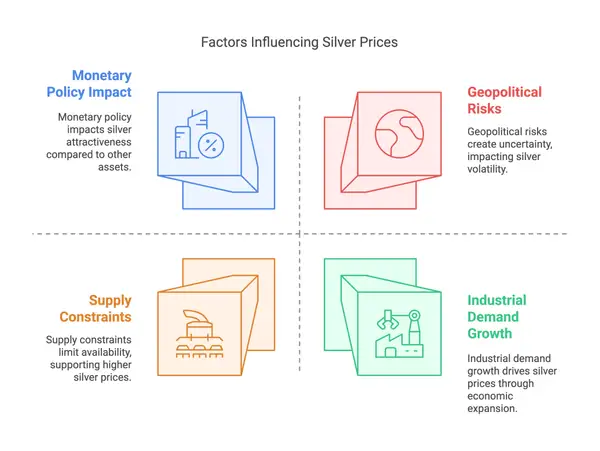
Forecasting where silver is headed requires paying attention to a set of major variables that consistently shape the market. These drivers come from economics, technology, industry, and investor behavior. Think of them as the dashboard indicators you need to watch before making any prediction.
Below is a clear, practical breakdown of the most important factors influencing silver price predictions today.
1. Industrial Demand Trends (the biggest long-term driver)
Industrial demand accounts for nearly half of total annual silver consumption. That makes it the most important pillar in forecasting future prices.
Major industries using silver include:
- Solar panels (photovoltaics)
- Electronics & semiconductors
- Electric vehicles
- 5G devices
- Medical equipment
- Batteries
- Chemical catalysts
When these sectors expand, silver demand grows automatically.
How this affects predictions:
If forecasts show strong growth in solar, EVs, and electronics, analysts raise their silver price expectations. If growth slows, predictions soften.
Tip: Energy transition reports and semiconductor demand forecasts are among the best early indicators.
2. Mine Supply and Production Costs
Supply is often underestimated in price forecasting. Yet silver mining has several quirks that make it tricky:
- Most silver is mined as a byproduct, so production depends on copper, zinc, and lead demand.
- Primary silver mines are relatively rare and expensive to develop.
- Cost inflation (energy, labor, transportation) can limit output.
- Political issues in mining-heavy countries (Mexico, Peru, Chile) can interrupt supply.
How this affects predictions:
If analysts expect tighter supply or rising production costs, predictions trend higher.
If new mines are expected to come online, forecasts may soften.
3. Investor & ETF Activity
Investment demand can swing much faster than industrial demand and can dramatically affect short-term forecasts.
Key components:
- ETF inflows/outflows (e.g., SLV)
- Futures market positioning
- Retail buying (coins and bars)
- Global risk sentiment
How this affects predictions:
Sharp ETF inflows often lead analysts to forecast bullish moves.
Heavy outflows or declining futures positioning usually result in more conservative predictions.
Why? Because investor moves are fast, large, and emotional — and silver is highly sensitive to them.
4. The Strength of the U.S. Dollar
Silver is priced globally in USD. This gives the dollar enormous influence.
- Strong dollar → silver becomes more expensive for other countries → demand falls → price predictions drop.
- Weak dollar → boosts silver demand globally → predictions rise.
How this affects predictions:
Analysts often adjust forecasts based on expected USD trends.
During periods of expected dollar weakness, you’ll often see more bullish predictions.
5. Interest Rates and Real Yields
Silver doesn’t pay interest. That means interest rates compete with it for investor attention.
Predictors watch:
- Federal Reserve announcements
- Treasury yields
- Inflation-adjusted (real) rates
How this affects predictions:
- High or rising rates → bearish/neutral forecasts
- Falling rates → bullish forecasts
This is one of the most reliable macro relationships in silver markets.
6. Inflation Expectations
Silver is not just an industrial metal — it also behaves like a partial inflation hedge.
When inflation expectations rise:
- Investors buy commodities
- Analysts forecast stronger silver performance
- Long-term predictions improve
When inflation is expected to fall:
- Hedge demand drops
- Predictions soften
How this affects predictions:
Opinion shifts on inflation often show up instantly in analyst reports and price forecasts.
7. Technological Innovations & Substitution Risks
Silver has unique conductive and reflective properties. But industries are always researching ways to reduce silver usage.
Two sides of this factor:
- Innovation that increases demand
- AI hardware
- advanced semiconductors
- renewable energy fields
- Innovation that reduces demand
- solar cell efficiency improvements
- copper substitution
- coatings requiring less silver
How this affects predictions:
If forecasts show higher silver use in emerging technologies, predictions become more bullish.
If forecasts highlight substitution risks, long-term predictions may flatten.
8. Geopolitical Events & Market Uncertainty
Silver responds strongly to global risk sentiment. Certain situations can push predictions higher or lower.
Events that tend to raise predictions:
- Trade conflicts
- Supply disruptions
- Wars
- Global recession fears
Events that lower predictions:
- Stability
- Strong manufacturing data
- Robust economic growth
How this affects predictions:
Analysts factor geopolitical stress into their price models — especially when it affects safe-haven demand or mining regions.
9. Central Bank Policies (Indirect but powerful)
Silver is not bought by central banks (unlike gold), but their policies still affect it indirectly.
Central banks influence:
- Currency strength
- Inflation
- Bond yields
- Investor sentiment
How this affects predictions:
When central banks signal loosening monetary policy, analysts often project higher precious metal prices.
Quick Summary Table: Key Factors & How They Impact Predictions
| Factor | Impact on Predictions When Rising | Impact When Falling |
|---|---|---|
| Industrial demand | Positive | Negative |
| Mine supply | Negative | Positive |
| Investor/ETF flows | Positive | Negative |
| U.S. dollar strength | Negative | Positive |
| Interest rates | Negative | Positive |
| Inflation | Positive | Negative |
| Geopolitical tension | Positive | Negative |
| Tech innovation | Mixed | Mixed |
Bottom Line
Silver price predictions are shaped by a complex mix of industrial trends, global economics, and investor psychology. The strongest and most consistent drivers remain:
✔ Industrial demand
✔ Supply constraints
✔ Macroeconomic conditions (USD, rates, inflation)
✔ Investor flows
By watching these indicators, you can understand why predictions move — not just what they are.
Short-Term Silver Price Forecast (2024–2025)
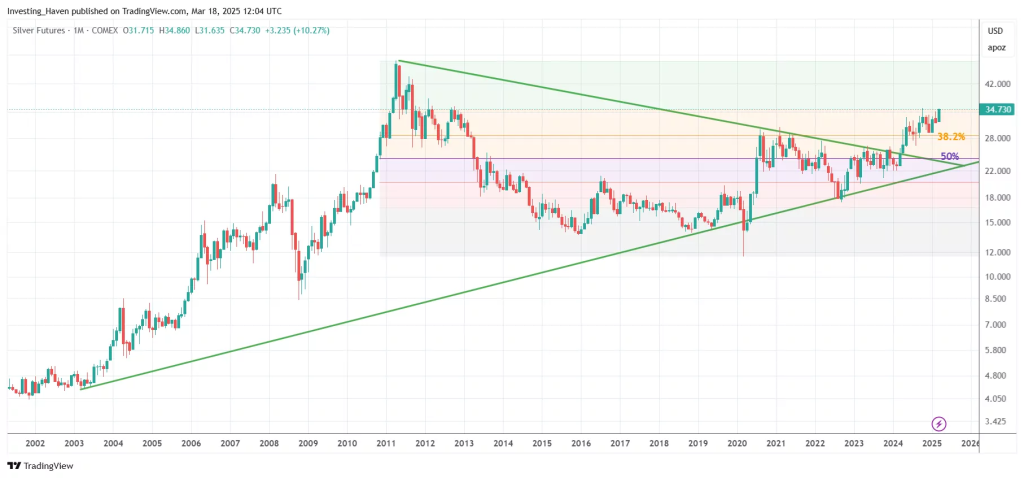
Short-term forecasts focus on the next 12–24 months. These predictions are driven less by long-term structural trends and more by economic cycles, industrial demand, investor behavior, and macro policies. Understanding short-term trends can help traders, industrial buyers, and investors plan entry and exit points effectively.
1. Key Factors Shaping the Short-Term Outlook
Even over one to two years, multiple influences interact to shape silver prices:
- Industrial demand fluctuations: Electronics, solar PV, and EV production cycles influence silver consumption.
- Investor flows & ETF positioning: Rapid inflows/outflows can cause volatility.
- U.S. dollar movements: A strong dollar typically suppresses silver prices; a weak dollar supports them.
- Interest rate policy & inflation expectations: Rate hikes or cuts and CPI/PPI data influence investor sentiment.
- Geopolitical developments: Trade tensions, conflicts, or economic sanctions may create short-term safe-haven demand.
Tip: In short-term forecasting, investor behavior and market sentiment often move prices faster than industrial demand alone.
2. Expected Price Range for 2024–2025
Analyst surveys and historical market trends suggest a likely trading range for silver in the next two years:
| Year | Conservative Range (USD/oz) | Likely Range (USD/oz) | Bullish Scenario (USD/oz) |
|---|---|---|---|
| 2024 | 24–28 | 26–32 | 34–36 |
| 2025 | 28–32 | 30–36 | 38–40 |
Interpretation:
- Conservative range assumes weaker industrial demand, higher rates, or a stronger dollar.
- Likely range accounts for normal fluctuations in industrial growth and investor activity.
- Bullish scenario includes rapid solar PV expansion, growing EV demand, and strong investor inflows.
3. Industrial Demand Trends to Watch
Short-term demand trends often act as early signals for price movements:
- Solar PV production: Rapid quarter-over-quarter growth can trigger supply tightness and price spikes.
- Electronics cycles: High semiconductor demand tends to support silver prices.
- EV production trends: Automaker reports and EV adoption forecasts indicate silver usage in batteries and electronics.
Quick check: Track quarterly industrial silver reports from the Silver Institute and IEA PV updates for actionable insights.
4. Investor and Market Sentiment Signals
Investor flows are especially important in short-term forecasts:
- ETF inflows: Significant buying (e.g., in SLV) typically signals a bullish short-term outlook.
- Futures positioning: A net long position in silver futures often coincides with rising spot prices.
- Retail activity: Coin and bar purchases spike during uncertainty, adding temporary upward pressure.
Example: In early 2024, ETF inflows combined with rising industrial demand led silver to test the $32/oz level before stabilizing.
5. Macro & Geopolitical Risks
Short-term volatility can be triggered by:
- Federal Reserve announcements: Rate decisions in 2024–2025 may cause sharp daily swings.
- Dollar fluctuations: Even a 1–2% change in the USD index can impact silver globally.
- Global uncertainty: Trade tensions or conflicts can temporarily boost prices.
6. Recommended Monitoring for Short-Term Traders
- Weekly spot price updates: Track movements on platforms like Kitco.
- ETF inflows/outflows: Monitor SLV, SIVR, and other major silver ETFs.
- Industrial demand reports: Silver Institute quarterly reports provide timely insight.
- U.S. dollar index (DXY) movements: Track daily or weekly changes.
- Interest rate announcements: Fed statements and inflation data directly influence short-term investor behavior.
- Geopolitical headlines: Any trade restrictions, sanctions, or conflicts can cause rapid swings.
Bottom Line for 2024–2025
Short-term silver prices will likely oscillate within the $26–36/oz range, with spikes possible in response to industrial demand surges or investor flows. Traders and short-term investors should combine macro tracking, industrial data, and ETF trends for actionable insights.
Even within the short-term window, volatility remains high, offering both risk and opportunity.
Long-Term Silver Price Forecast (2030–2050)
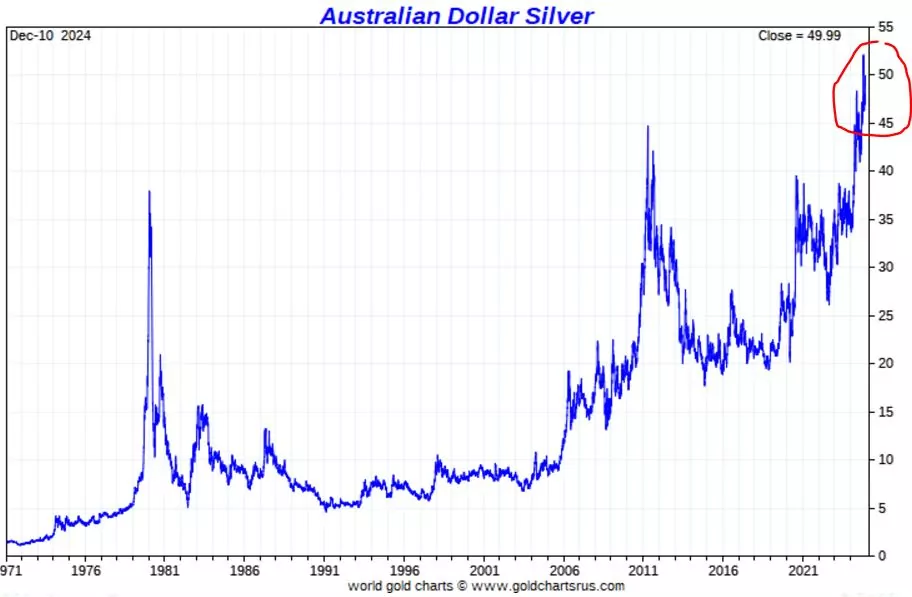
Long-term silver forecasting looks two decades ahead, combining industrial demand trends, supply constraints, macroeconomic cycles, and technological shifts. While precise prices are impossible to guarantee, structured scenarios can provide guidance for investors, manufacturers, and policymakers.
1. Structural Drivers for Long-Term Growth
The most important long-term drivers of silver prices include:
- Industrial demand expansion
- Solar panels and EVs are expected to consume increasing amounts of silver.
- Electronics, AI hardware, and high-tech manufacturing continue to drive industrial usage.
- Limited mine supply and byproduct dependency
- Most silver comes as a byproduct of copper, zinc, or lead mining.
- New primary silver mines are rare, expensive, and slow to develop.
- Global macroeconomic conditions
- Inflation expectations, interest rates, and currency strength influence investor demand.
- Central bank policies indirectly affect long-term precious metal pricing.
- Technological applications and substitution
- Silver is essential for certain high-tech applications; new substitutes may emerge but won’t eliminate demand quickly.
- Investor flows and ETF activity
- Long-term accumulation in ETFs, coins, and bars adds a layer of support to prices, especially during structural deficits.
2. Forecast Scenarios (2030–2050)
Analysts often model three scenarios: conservative, base-case, and bullish. These scenarios reflect varying assumptions about industrial growth, supply expansion, and macroeconomic factors.
| Scenario | 2030 (USD/oz) | 2040 (USD/oz) | 2050 (USD/oz) | Rationale |
|---|---|---|---|---|
| Conservative | 30–40 | 35–45 | 40–55 | Modest industrial growth, slow supply constraints, stable macroeconomic conditions. |
| Base-case | 40–60 | 55–80 | 70–110 | Strong industrial demand from solar & EVs, moderate deficits, steady investor interest. |
| Bullish | 80–120 | 120–200 | 150–300+ | Rapid tech adoption, constrained supply, macro tailwinds (weak dollar, inflation). |
Note: These ranges are not exact predictions but structured guidance based on observable trends and historical behavior.
3. Key Risks That Could Alter Long-Term Forecasts
Even over decades, several factors can push silver prices higher or lower:
- Bullish pressures:
- Persistent supply deficits
- Accelerated adoption of renewable energy and EVs
- Weakening USD or rising inflation
- Bearish pressures:
- Technological substitution reducing industrial demand
- Large-scale recycling or mine discoveries
- Global recessions slowing industrial consumption
Understanding these forces helps investors adjust expectations dynamically.
4. Industrial vs. Investment Demand Projections
- Industrial demand is expected to grow steadily, particularly from solar PV (17–20% of total demand), EVs, and electronics.
- Investment demand may fluctuate, providing short-term spikes or dips but supporting the long-term floor.
This dual nature (industrial + investment) differentiates silver from other metals and explains why long-term price trends often show steady upward pressure punctuated by volatility.
5. Practical Takeaways for Investors and Businesses
- Diversify exposure: Combine physical silver, ETFs, and industrial contracts to balance risk.
- Monitor industrial indicators: Solar panel production, EV adoption, and electronics output are early signals for structural demand.
- Track macro trends: Inflation, interest rates, and USD strength can influence price timing.
- Scenario planning: Use conservative, base-case, and bullish scenarios to plan for multiple outcomes.
- Stay informed on mining & recycling developments: Changes in supply can alter long-term forecasts substantially.
Bottom Line
Over the 2030–2050 horizon, silver’s long-term outlook is generally bullish, driven by industrial demand growth, supply constraints, and the metal’s dual role as an industrial and investment asset. While short-term fluctuations are inevitable, the structural forces suggest higher average prices in the long run.
Key insight: Investors and businesses should treat silver as both a hedge against inflation and a strategic industrial resource — monitoring production, technology trends, and macroeconomic indicators to make informed decisions.
Frequently Asked Questions (FAQ) About Silver Price Predictions
Is silver a good investment in 2025?
Silver can be a strong investment in 2025, especially for people looking for long-term value, inflation protection, and exposure to industrial growth.
Reasons silver may perform well in 2025:
- Industrial demand (solar, EVs, electronics) is increasing
- Silver is still undervalued compared to historical highs
- If inflation stays high, silver often rises
- A weaker U.S. dollar or financial uncertainty typically boosts precious metals
However, silver is more volatile than gold, so its price can swing quickly. It’s good for long-term investors who can handle ups and downs.
Can silver reach $50 again?
Yes, silver can realistically reach $50 again, but it would require strong market conditions such as:
- A major rise in industrial demand
- Heavy investor buying
- Inflation spikes
- Economic uncertainty
- A weaker U.S. dollar
Silver reached nearly $50 twice in history (1980 and 2011). So, while it’s not guaranteed, it’s definitely possible—especially if global demand keeps rising.
Why is silver so cheap compared to gold?
Silver is cheaper than gold for several reasons:
- Gold is rarer and has higher global demand
- Central banks store gold, not silver
- Silver’s market is much smaller and more volatile
- Silver has both industrial and investment uses, which keeps prices unstable
- Gold has stronger “safe haven” status during economic crises
Despite being cheaper, silver often grows faster in bull markets because its percentage gains can be higher.
Will silver hit $100 in the future?
Silver could reach $100 in the long-term, but it would require:
- A major supply shortage
- Explosive solar and EV industry growth
- Global inflation or currency weakness
- Massive investor demand
Analysts are split:
- Bullish analysts say $100+ silver is possible by 2035–2040
- Conservative analysts believe silver will stay below $60
So, $100 is possible—but it’s a long-term scenario, not an immediate forecast.
What is the safest way to invest in silver?
The safest ways to invest in silver include:
1. Physical Silver (Low Risk, Long Term)
- Silver bars
- Silver coins
- Silver rounds
You own real metal with no counterparty risk.
2. Silver ETFs (Convenient & Liquid)
- Easy to buy and sell
- Good for beginners
- Tracks silver’s price
3. Silver Mining Stocks (Higher Risk)
- Potential for big gains
- But more volatile than physical silver
For the safest option, most investors choose physical silver + ETFs.
Is silver better than gold long-term?
It depends on your investment goals:
Silver is better if you want:
- Higher growth potential
- Cheaper entry price
- Exposure to industrial markets
- Higher volatility (bigger upside swings)
Gold is better if you want:
- Stability
- Safe-haven protection
- Lower volatility
- Long-term wealth preservation
For many investors, the best strategy is to hold both silver and gold.
Should I buy silver bars or coins?
Both are good—but they serve different purposes:
Buy Silver Bars if you want:
- Lowest cost per ounce
- Easy stacking and storage
- Large investments
Buy Silver Coins if you want:
- Better resale value
- Government-backed purity
- More collectors’ value
- Easier to sell in small amounts
Most investors buy a mix of bars for bulk value and coins for liquidity.
What affects silver prices daily?
Daily silver price movements are driven by:
- U.S. dollar strength
- Interest rate changes
- Inflation news
- Stock market volatility
- Industrial demand data
- Investment demand (ETFs, futures)
- Global economic events
- Geo-political tensions
Because silver is both an industrial metal and a precious metal, its price reacts quickly to world news.
Is there a silver shortage?
Yes—many reports show that silver supply is tightening.
Reasons:
- Mining production has slowed
- Industrial demand (especially solar panels) is exploding
- Recycling rates are too low to fill the gap
- Governments are pushing green energy, increasing usage
Most analysts agree the world is moving toward a multi-year silver deficit, which could push prices higher.
Will industrial demand push silver prices higher?
Most likely, yes. Industrial demand is the biggest long-term driver for silver.
Industries using silver are growing fast:
- Solar panels
- Electric vehicles
- Batteries
- Electronics
- Medical devices
- 5G technology
As technology grows, silver usage keeps rising—making it one of the most important industrial metals in the world. This is a powerful factor supporting bullish silver price predictions.
Conclusion: Silver Price Predictions – What You Should Remember
Silver is unique among metals because it is both an industrial necessity and a financial asset. This dual nature makes its price influenced by industrial demand, mine supply, investor behavior, macroeconomics, and technology trends.
Here are the key takeaways from our analysis:
- Industrial demand drives long-term growth: Solar, EVs, electronics, and emerging technologies will continue to increase silver consumption.
- Supply constraints create upward pressure: Most silver comes as a byproduct of other mining activities, limiting rapid supply expansion.
- Investor sentiment amplifies short-term moves: ETF inflows, futures positioning, and safe-haven buying can create volatility.
- Macro and geopolitical factors matter: USD strength, interest rates, inflation, and global uncertainty all influence silver prices.
- Scenario planning is essential: Conservative, base-case, and bullish forecasts help investors prepare for multiple outcomes.
While silver can experience short-term volatility, the combination of structural industrial demand, limited supply, and investor interest points toward higher prices over the long run (2030–2050).
Monitoring the six key metrics — industrial demand, mine production, recycling, ETF flows, macroeconomic indicators, and technological shifts — will help you stay ahead in this dynamic market.